$ w7 E2 {! _9 m4 l" i, \「我能闻出有松脂味。」——参观者朱丽娅 2 e1 q4 u5 E* T) A; r/ V% |* C# m+ C' C d% }+ L& w' x
来源:信息时报1 N: A2 U" L: {7 ?0 j& w, A
, ]# {6 e5 L/ n2 F8 k$ e4000-year-old perfumes found on Aphrodite's fabled island" i, _3 I. a* ?4 |2 s; [0 ~
The remains of ancient scents and bottles found on Cyprus have gone in display, writes Malcolm Moore. 0 R6 F' J- O0 b. j! W2 ]7 x4 \3 t, w
ITALIAN archaeologists have found the world's oldest perfumes on Cyprus.* u' x& x# D7 q0 n+ C* D7 Z2 O
% h' N a5 V5 O( w( pThe perfumes were scented with extracts of lavender, bay, rosemary, pine or coriander and kept in tiny translucent alabaster bottles./ e. `( `2 o b2 ?
% ?! l1 N B* A' c
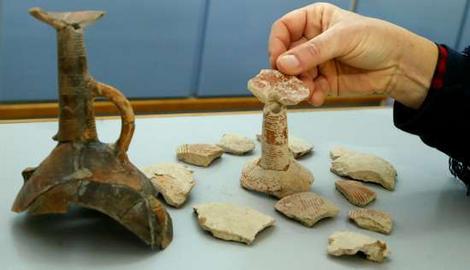
The remaining traces found at Pyrgos, in the south of the island, are more than 4000 years old.! P; ~- d3 ]4 V5 K; E! e- ~# M
- e6 I0 U% ^% r" d7 [, u( SThey were discovered inside what archaeologists believe was an 3995-square-metre perfume-making factory. 7 e* i) f) I! A. ` r4 D , [1 m. M& D! d"We were astonished at how big the place was," the leader of the archaeological team, Maria Rosa Belgiorno, said. "Perfumes must have been produced on an industrial scale." ! w, h* X. l8 S9 | # U7 Z( \4 w* l, b! P% `: G6 DAt least 60 stills, mixing bowls, funnels and perfume bottles were perfectly preserved at the site, which had been blanketed in earth after a violent earthquake about 1850BC. 0 M1 T1 I4 ]& t5 h6 H7 y# U* @ " X9 t: y0 ^& k' {- H2 l) QThe abundance of perfumes fits well with Cyprus' mythological status as the birthplace of Aphrodite, the Greek goddess of love.3 m/ C. N: b8 j: ^& V' V9 E
' i `4 b' J3 v6 u"The goddess' myth was strongly linked to the perfume she used to get what she wanted," the head of Cyprus' antiquities department, Pavlos Flourentzos, said.. z1 ], l' \3 D# @# k
0 g R3 g. g& Z" oThe finds are now on display at the Capitoline Museum in Rome.' [3 U& a$ ^1 x+ h' `
* O6 E' |7 R5 X5 g! P1 `8 E+ VFour of the perfumes have been re-created from residues found at the site.5 r, M. [2 }: f* e1 ?: Z- X# Q2 f
2 n& {( h6 O( Y4 U/ G4 XAn Italian foundation, which aims to re-create antique traditions, distilled them according to techniques described by Pliny the Elder, by grinding the herbs, adding them to oil and water, and burying them in a long-necked jug over hot embers for 12 hours. - G( y& k7 d5 \4 y7 N) ^( k9 R# E) O0 ^$ A! O
"It smells good, but strong," museum visitor Alessia Affinata, 30, said. "I can smell the pine especially," said Giulia Occhi Villavecchia, 23. ) T7 X, j1 j# |& w# r" q4 P" x " v; r( s" ]) qNeither was sure they would actually wear them.
图片附件: [Fragments of ancient perfume jars found at Pyrgos, Cyprus.] perfumes.jpg (2007-3-24 10:10, 17.02 KB) / 下载次数 93 http://www.csuchen.de/bbs/attachment.php?aid=249682&k=6d307144ba8232c06f59d08b49304a9a&t=1792749076&sid=8u5Hx8

 图片附件: [Fragments of ancient perfume jars found at Pyrgos, Cyprus.] perfumes.jpg (2007-3-24 10:10, 17.02 KB) / 下载次数 93